

Boiler Not Working? Safe Checks Before Calling an Engineer

If your boiler stops working, a few safe checks can sometimes identify a simple control or pressure issue. These checks are suitable for homeowners in Horsham and nearby areas, but never remove the boiler casing or interfere with gas components.
Check the display and fault code
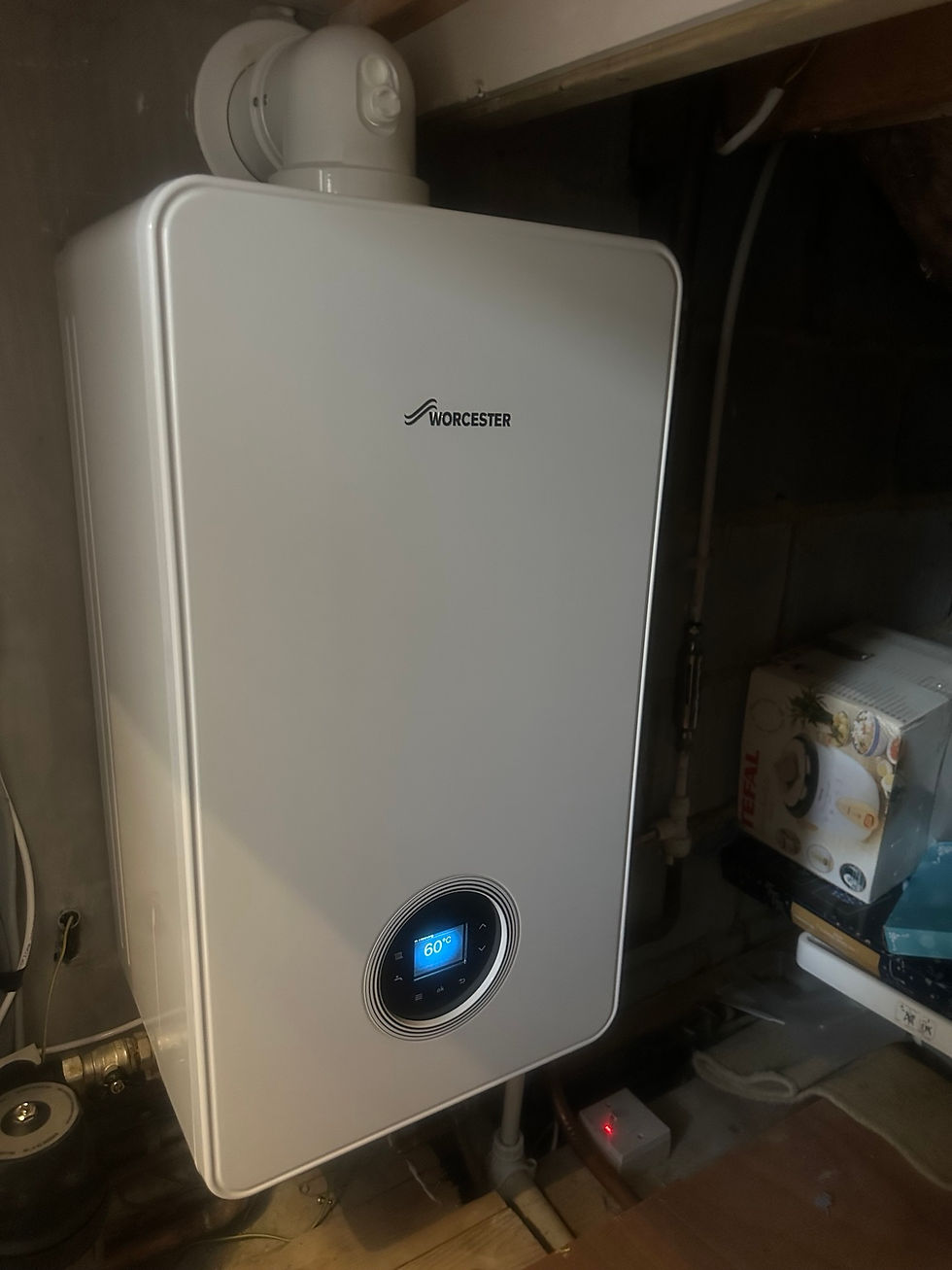
Look at the boiler display and write down any fault code exactly as shown. The code helps an engineer prepare for the visit and may identify whether the fault concerns ignition, pressure, circulation or another component.
If the manufacturer instructions allow a reset, try one reset only. Repeated resetting can hide a persistent fault and is unlikely to provide a lasting repair.
Check the power, thermostat and programmer
Confirm the boiler has electrical power and that its display is illuminated. Check that the heating programmer is calling for heat and turn the room thermostat above the current room temperature.
If only one radiator is cold while the rest of the heating works, the problem may be local to that radiator or its valve rather than the boiler.
Check the system pressure
Check the pressure gauge against the operating range stated in the boiler instructions. Many sealed systems operate at roughly 1 to 1.5 bar when cold, but the correct figure depends on the appliance and system.
If pressure repeatedly falls, do not keep topping it up without investigation. The system may have a leak, expansion vessel problem or pressure relief fault.
Send useful information before the visit
For quicker triage, send your postcode, boiler make and model, the fault code, a short description of what happened and clear photos of the display and boiler. Mention whether you have heating, hot water, both or neither.
If you smell gas, suspect fumes or a carbon monoxide alarm activates, stop using the appliance, ventilate the property where safe and contact the appropriate emergency service. Do not attempt a repair yourself.
Comments